


-

- კომენტარები არ არის
- July 27, 2026
Have you heard the term “SEO” but do not fully understand what it means? Or perhaps you know the basics but want to understand how SEO has changed and what matters in 2025? You are in the right place. This guide will help you understand what SEO is and how to use it to support your website’s success.
What Is SEO?
SEO, or Search Engine Optimization, is a collection of processes designed to increase your website’s visibility in the organic, or unpaid, results of search engines such as Google and Bing. Simply put, when people search for information related to your products, services, or subject area, SEO helps your website appear higher in the search results.
The higher your page ranks, the greater the likelihood that potential customers will find and visit it. This can result in more traffic, greater brand awareness, and ultimately, more success for your business. Understanding what SEO is represents the first step towards using this potential effectively.
How Does SEO Work?
Search engines such as Google use complex algorithms and automated bots—often called crawlers or spiders—to evaluate billions of webpages. This process involves several stages:
- Crawling: Bots discover new and updated webpages by following links from one page to another.
- Indexing: The content of discovered pages—including text, images, and videos—is analysed and stored in a vast database known as an index. You can think of it as an enormous digital library.
- Ranking: When a user performs a search, search engine algorithms select the most relevant and high-quality pages from the index and arrange them in the search results, or SERP—Search Engine Results Page—based on hundreds of factors.
SEO involves understanding these “hundreds of factors” and influencing them appropriately. These factors continually change and evolve, but the fundamental principles remain focused on creating maximum value for users. It is important to understand what SEO factors are and how they can be influenced.
Main Categories of SEO Factors:
Successful SEO involves working across several key areas:
- On-Page SEO: This involves optimizing the elements found directly on your website’s pages, including content quality, keyword usage, headings, images, and technical performance.
- Off-Page SEO: This focuses on increasing your website’s authority and trustworthiness through external factors, including high-quality backlinks, social signals, and brand mentions.
- Technical SEO: This ensures that your website is fast, secure, mobile-friendly, and easily accessible to search engines for crawling and indexing.
Each of these categories will be examined in detail throughout this guide. Understanding these SEO components will help you develop a complete and balanced strategy.
Why Is SEO Important for Marketing in 2025?
SEO is a cornerstone of digital marketing for several reasons:
- Organic search is a major source of traffic: People perform billions of searches every day to find products and services. A high position in the SERP can provide a consistent stream of unpaid traffic.
- It builds trust and authority: Appearing on the first page of Google can increase users’ confidence in your business.
- It improves the user experience: Effective SEO often results in a well-structured, fast, and easy-to-use website.
- It supports other marketing channels: Information gathered about audiences through SEO can help improve paid advertising, social media campaigns, and email marketing.
- It provides long-term results: Unlike paid advertising, correctly implemented SEO can deliver sustainable, long-term results.
- Modern search challenges: The SERP is constantly evolving. AI-powered answers, such as Google’s SGE, and Rich Results mean that users may receive answers directly on the search results page. Therefore, SEO in 2025 also involves adapting content to these new formats and maximizing visibility across the SERP.
What Can You Expect from This Guide?
This guide is divided into nine main chapters covering every critical aspect of SEO—from content creation and technical optimization to link building and analytics. We will examine: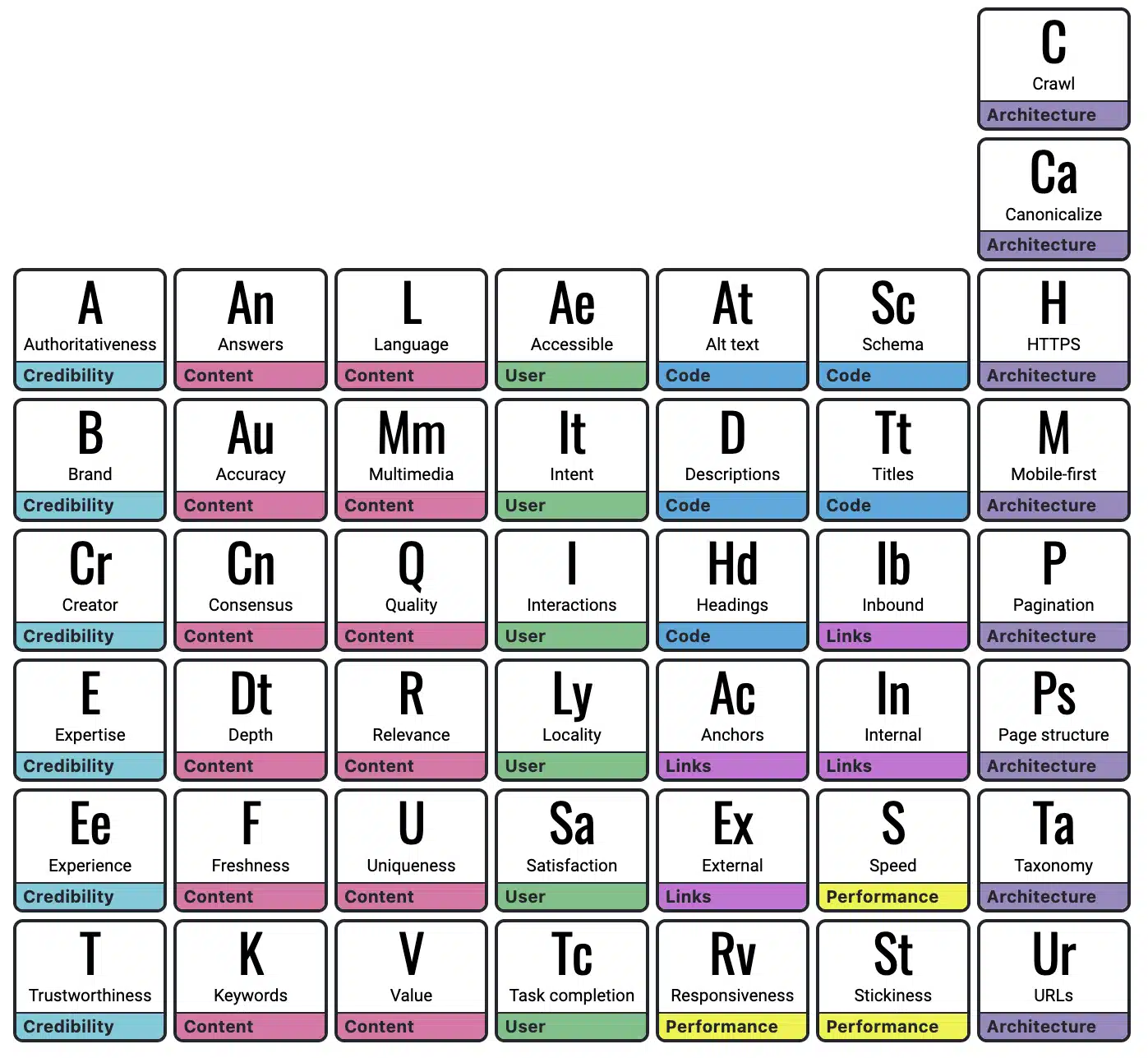
- Chapter 1: Types of SEO Factors: On-Page, Off-Page, and Toxins
- Chapter 2: Content and Its Role in SEO: Quality, Research, and E-E-A-T
- Chapter 3: Website Architecture and Technical Performance
- Chapter 4: HTML and Structured Data
- Chapter 5: Trust, Authority, and Reputation
- Chapter 6: Backlink Acquisition and Link-Building Strategies
- Chapter 7: Personalization and User Context
- Chapter 8: Strategies to Avoid: SEO Toxins
- Chapter 9: New Search Verticals: Voice, Local, and Visual Search
Are you ready to explore SEO in greater depth and learn how to turn it into a tool for your success? Let us begin.
