

-

- კომენტარები არ არის
- August 1, 2026
Red
Brands: Coca-Cola, Canon, Levi’s, H&M, and others.
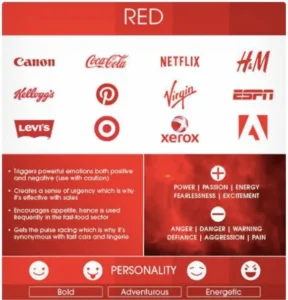
Positive associations:
- Energy
- Passion
- Fearlessness
- Excitement
- Encouragement to take action
Negative associations:
- Danger
- Aggression
- Fear
- Pain
Psychological characteristics:
- Evokes both positive and negative emotions
- Stimulates appetite, which is why it is often used in the food industry
- Increases heart rate and creates a sense of urgency
Personality traits: Boldness, energy, and a sense of adventure.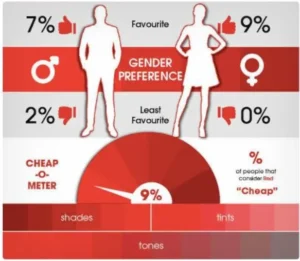
Statistics:
- 9% of women and 7% of men name red as their favorite color.
- 2% of men would not choose red, unlike women.
- Only 9% consider red a “cheap” color.
Orange
Brands: Amazon, Mozilla Firefox
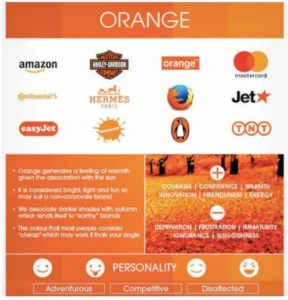
Positive associations:
- Friendliness
- Energy
- Freshness
- Warmth
Negative associations:
- Frustration
- Inertia
- An unpleasant impression
Psychological characteristics:
- Creates a sense of sunshine and warmth
- Promotes a positive mood
- Is often associated with autumn
Personality traits: Adventurousness, competitiveness, and sometimes an unfriendly tone.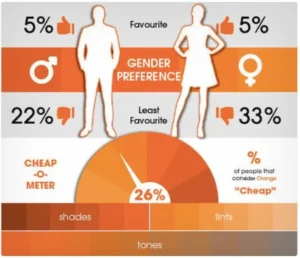
Statistics:
- Only 5% of both men and women view orange positively.
- 22% of men and 33% of women say they would not choose this color.
- 26% consider orange a “cheap” color.
Yellow
Brands: McDonald’s, Ferrari, Nikon, Snapchat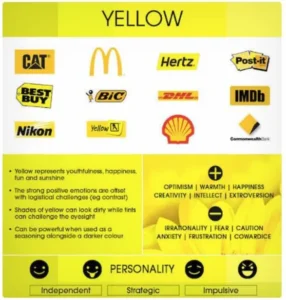 Positive associations:
- Optimism
- Creativity
- Happiness
- Mental activity
- Fear
- Frustration
- Cowardice
- Irrationality
- Associated with sunshine and youth
- A positive background supports psychological balance
- Creates a stronger visual effect against a dark background
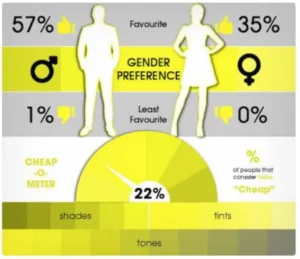
Statistics:
- 57% of men and 35% of women name yellow as their favorite color.
- 0% of women view yellow negatively.
- 22% associate yellow with poverty.
In the next article, we will explore the remaining colors: green, blue, purple, black, white, and others, and examine their influence on consumer emotions and behavior.