


-

- კომენტარები არ არის
- July 27, 2026
Many business owners ask the same question: do I really need Local SEO? This is a perfectly reasonable concern. You are busy, and your time, budget, and energy are valuable resources. Do you genuinely need another area that requires constant attention?
If your goal is to attract local customers—whether you want them to visit a physical store, place an order online or by phone, book an appointment, visit a clinic, or complete another type of business action—then the answer is clear: yes, you need Local SEO.
Who Benefits from Local SEO and Why?
Almost every business that serves customers within a specific geographic area can benefit from Local SEO. This includes:
- Retail stores
- Service-based businesses, such as plumbers and electricians
- Restaurants and hotels
- Hospitals and clinics
- Banks
- Construction companies
- Law firms and many other businesses
Let us look at several specific examples.
Lawyers and Law Firms
One of the greatest advantages of Local SEO for this sector is that Google can display a direct “Call” button in mobile local search results. When a potential client searches for a “[specialisation] lawyer”, they are shown targeted results relevant to their specific location.
A properly implemented Local SEO strategy can place a lawyer near the top of the search results, where the primary call to action is the “Call” button.
This is especially effective because people who require urgent legal assistance following an accident or another incident often search for lawyers directly from their phones to request an initial consultation. Local SEO allows them to see your offer at precisely the moment they need it.
Doctors and Medical Practices
When someone searches for a medical professional, they often use phrases such as “[type of doctor] near me” or “nearby [type of doctor]”.
Most people do not want to travel a long distance to visit a doctor. They prefer a nearby medical professional for regular appointments. This is particularly important when dealing with toothache, physical injury, or another medical problem that requires prompt attention.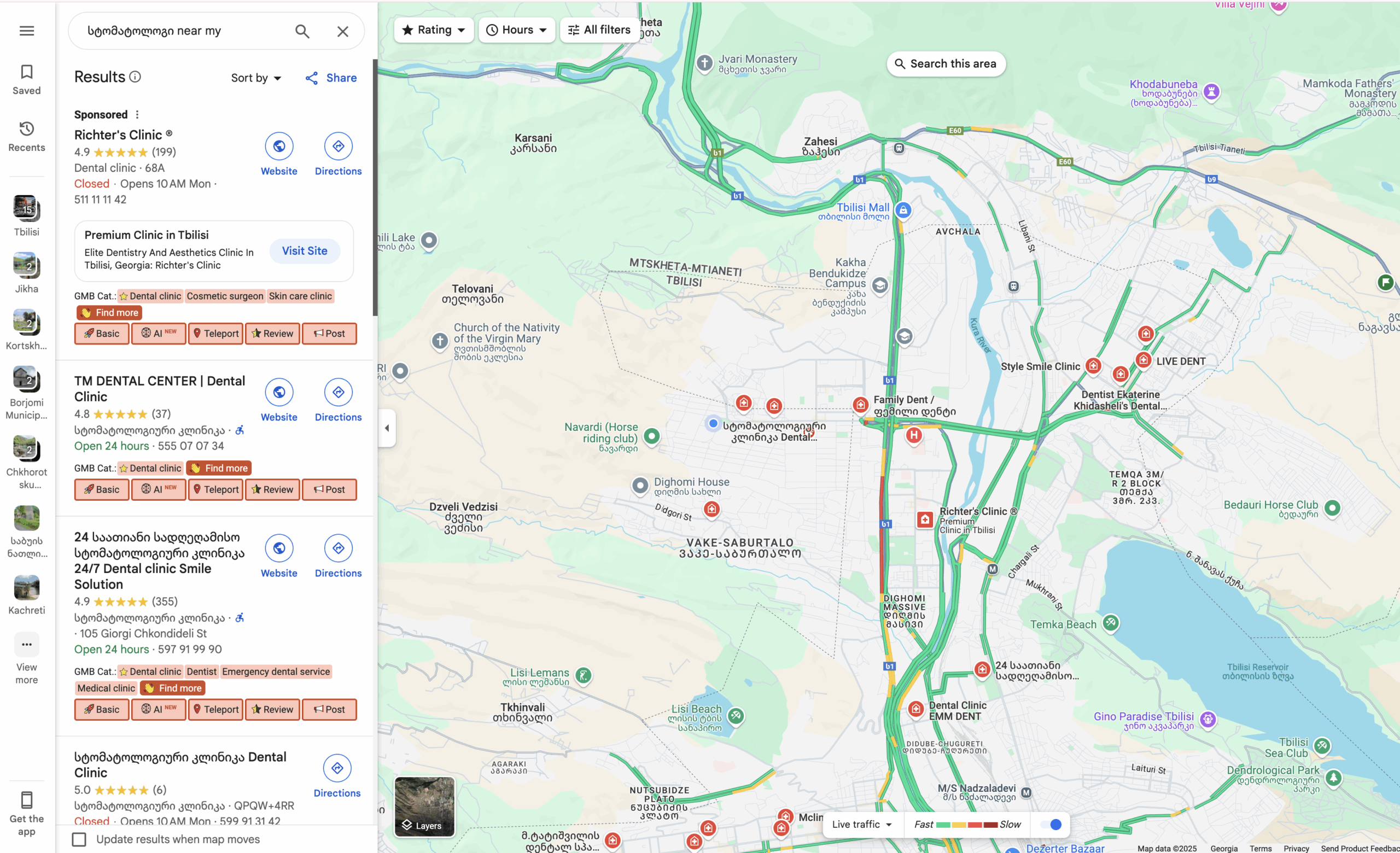
Local search results in the Google Map Pack display the doctor’s or clinic’s name, address, and, most importantly, a “Directions” link that immediately opens the map application on the user’s phone. Users can also call the clinic directly to book an appointment.
Plumbers
When someone has an urgent plumbing problem, they do not usually rush to a shop. Instead, they typically search Google for “plumber near me”.
Google’s search results allow users to call a plumber immediately, read customer reviews, and arrange assistance quickly.
Who May Not Benefit from Local SEO?
Although Local SEO is valuable for many businesses, there are some exceptions. Certain business models simply do not require local optimisation:
- Online-only ecommerce stores that do not have a customer-facing physical location
- Businesses that do not want to disclose their local information or address publicly
- Private online sellers who want to remain anonymous
Local Search Still Requires General Organic SEO
Local SEO results often appear in the form of Google’s Map Pack, but your website’s general organic rankings are also important. They help Google assess your business’s prominence, which is one of the main local ranking considerations.
Today, successful SEO is shaped by:
- User experience and behavioural signals
- E-E-A-T: Experience, Expertise, Authoritativeness, and Trustworthiness
- High-quality content
- High-quality backlinks
- Strong technical SEO
However, you should also pay attention to factors that are specific to Local SEO:
- Finding the right local keywords and topics
- Ensuring high-quality technical SEO
- Creating valuable content for a local audience
- Acquiring backlinks to strengthen authority
- Checking the accuracy and consistency of your NAP information—name, address, and telephone number—across different online sources
- Optimising for local ranking signals, which will be discussed in more detail in the following chapters
When shifting towards a local focus, your standard SEO methods may need to be adjusted slightly compared with traditional optimisation approaches.
Local Search Is Often Voice Search
With the widespread adoption of smartphones and devices such as Amazon Echo and Google Home, voice search has become a popular method for finding local information. For many users, it is easier to say “find a doctor near me” or “find a plumber near me” than to type the same request.
It is therefore unsurprising that local search queries written or spoken in a natural, conversational style are becoming increasingly common.
For service-based businesses: Try keyword variations that contain questions. Tools such as Semrush’s Topic Research Tool and AnswerThePublic can help you identify the questions people search for. This is an effective way to discover Local SEO keyword opportunities.
For businesses with a physical location, such as a shop, restaurant, or office: Focus on conversational keyword variations that reflect how customers naturally speak and search.
Local Search Is Primarily Mobile Search
We know that a significant proportion of local searches are performed on mobile devices and that mobile-friendliness is relevant to Google rankings. What does this, together with mobile-first indexing, mean for your Local SEO strategy?
Google has already optimised the Map Pack for mobile users. However, it is your responsibility to provide a convenient, user-friendly website and to ensure that Google can understand and crawl it through properly implemented technical SEO.
Local SEO Requires a Dedicated Strategy
This does not mean that Local SEO should consume most of your time. It is based on general SEO principles, but it also requires specific methods and tactics.
In the following chapters, we will examine a detailed checklist for creating a new or improved Local SEO strategy, explore its different components, and share expert recommendations and useful tools.
