


-

- კომენტარები არ არის
- July 23, 2026
The relationship between Search Engine Marketing (SEM) and brand strategy goes far beyond simply operating in parallel. Effective synergy between these two disciplines—in other words, the integration of branding and search marketing—is essential for achieving meaningful gains in brand awareness, market share growth, and overall marketing performance.
Branding and search marketing teams have a great deal in common, and they need one another. For this reason, it is extremely important that they work together both strategically, at the level of major plans, and operationally, in their day-to-day activities.
This collaboration is essential because the successful achievement of company goals and marketing objectives depends directly on how actively both teams are involved, how effectively they use available resources, and how consistently they operate within an integrated branding and search marketing framework.
“Search marketing specialists are often involved only at the final stage of the operational process and remain relatively distant from the development of the brand’s core strategy.
When a company needs to demonstrate the return on investment generated by branding, that value is often measured later through the performance of different marketing channels, the platforms used, and the results of strategies that have already been implemented.
Search marketing efforts are often less effective when a company lacks a distinctive brand and a clearly defined strategy. Without these elements, it becomes difficult to stand out from competitors on search engine results pages, whether through paid advertising such as PPC or through the information presented on the website.”
I believe there is substantial value in integrating branding and search marketing. It is also far more effective when these disciplines form a genuine partnership and collaborate closely within larger business and marketing teams as part of the broader organizational ecosystem.
Based on an analysis of industry discussions, accumulated experience, and shared professional perspectives, the following strategic recommendations are intended to make the integration of branding and search marketing more effective.
The recommendations are divided between SEM specialists and branding professionals, including creative experts and strategists.
These approaches can generate more integrated and higher-performing marketing opportunities, which are critical for increasing brand equity, strengthening market position, and optimizing overall business performance.
For Search Marketing Specialists: The Need to Standardize Content and Creative Assets
Without a strong and documented brand strategy—including a clearly defined brand voice, visual identity, and key messaging pillars—search marketing specialists, like professionals working across other marketing channels, often operate without sufficient strategic coordination.
This frequently occurs when they are creating the content and assets required for successful SEO and paid search campaigns, directly limiting the potential benefits of integrating branding and search marketing.
The consequences are particularly visible in the development of high-conversion content and creative assets required for SEO and PPC campaigns.
As a result, maintaining consistent communication with the target audience becomes more difficult, campaign effectiveness declines, and opportunities to maximize return on investment are restricted.
In this type of strategic vacuum, channel-specific strategies and established best practices may still help determine what should be created and which words, messages, and creative elements should be used.
However, the resulting execution may be fragmented, inconsistent, and disconnected from broader themes and business objectives.
When clear standards and strategies are available to guide us, we can communicate the brand’s core and distinctive messages more effectively and bring the brand to life across every relevant channel.
Unique Value Propositions and Their Role
One of the main measures of search campaign and strategy performance is how effectively they generate conversions—that is, desired actions such as purchases or registrations.
At a deeper level, it is also important to understand what happens after those conversions: whether they become actual sales, revenue, and profit.
When leads are not suitable for your business and cannot be qualified, when your product or service appears too expensive, when sales representatives constantly face objections about price, or when users abandon an online store and return to Google to continue searching, it indicates that the brand has not communicated its story or value proposition effectively.
In such cases, the integration of branding and search marketing is critical for delivering the right message.
There will always be customers searching for the cheapest available product. If your company is not positioned as the lowest-price provider in the market, you will inevitably lose some of those sales.
However, when someone is searching for your unique offer and the broader set of factors that make it valuable—which may include price but extend far beyond it—you need to communicate that value effectively at every touchpoint.
SEO and PPC strategy must be treated as equally important parts of that communication process.
If your unique value propositions have not been clearly defined, you may end up inventing messages without a strategic basis, relying on less meaningful features and benefits, or unintentionally presenting your products and services as interchangeable with those of your competitors.
That approach is ineffective.
Supporting and Coordinating Other Existing Resources
Based on my own experience managing SEO and paid search, when I worked with copywriters, UX designers, and other specialists, I was frequently asked questions beyond SEO about the brand’s voice, tone, style, and related elements.
In many cases, there was no individual, team, or documentation available to provide the necessary guidance.
We can confidently say that SEO, in particular, depends on access to and collaboration with other resources, including IT professionals, UX specialists, copywriters, and others, in order to support ongoing work and achieve the desired results.
The integration of branding and search marketing helps coordinate these resources more effectively.
When branding and brand strategy are integrated and readily accessible, it becomes easier to reduce the gaps and strategic vacuum that can emerge when other specialists and departments become involved.
The more integrated your messaging is, the better everyone understands the brand and the rules that guide its communication.
This allows teams to accomplish more together, use resources efficiently, and avoid disconnected research and decision-making across different functions and departments.
A Guide for Brand Creatives and Strategists: Improving Effectiveness
Creating a Stronger Connection with KPIs and ROI
Brand strategy and brand development have always been critical to how a company presents itself and how it influences product development, sales, marketing, and customer service.
However, in many cases, connecting branding directly to specific Key Performance Indicators (KPIs) has been difficult.
At this stage, stakeholder reactions, the reception of the intended messaging, and its validation can be evaluated.
However, most measurement occurs further downstream in marketing, sales, and other areas, beyond the initial impression.
These measurements are not usually designed specifically to assess the brand’s influence on marketing tactics and sales pipelines.
This is where the integration of branding and search marketing plays a critically important role.
By developing closer relationships and stronger integration between digital marketing professionals, SEM specialists, and branding teams, companies can create more accurate customer journey maps.
This helps align KPIs across the entire process, from branding and initial awareness through to conversions and sales.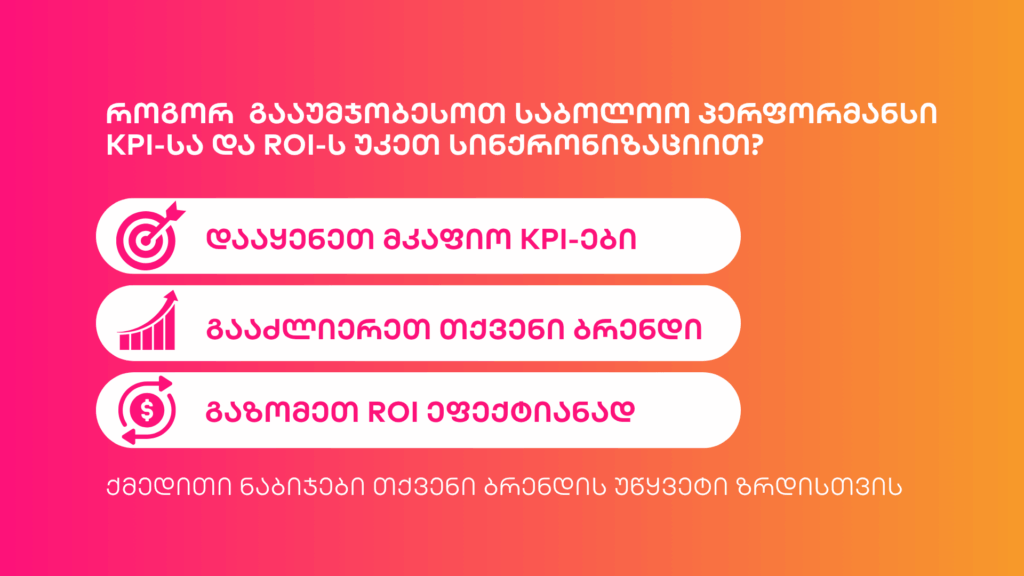
Research and Data: New Perspectives
It is important to recognize that branding relies heavily on market research to guide its processes and strategic decisions.
Search marketing is similarly built on research data—including keywords, audiences, and competitors—as well as analytics that measure performance and impact as close to real time as possible.
Research and analytics produced specifically for search marketing are not usually treated as primary inputs for branding projects.
Nevertheless, this information can be an excellent supplement—and, in some cases, a uniquely valuable source of insight—that adds another dimension to the market research used in brand strategy development and decision-making.
From this perspective, the integration of branding and search marketing creates new strategic opportunities.
By partnering with search marketing colleagues, exchanging experience, and participating in different types of strategic discussions, branding teams can gain access to a substantial amount of new and valuable information.
Refining and Optimizing Ongoing Processes
Branding as a Dynamic Process
Branding, rebranding, and brand strategy are often treated as projects or initiatives that are completed once and then repeated several years later.
They are rarely viewed as ongoing or continuous processes.
Many brand specialists note that numerous companies undertake a major rebranding exercise approximately once every ten years.
Why does this happen?
It happens because branding is often treated as a one-time event rather than an ongoing strategy that should be measured, refined, and optimized.
This is very different from the approach commonly taken in search marketing.
By using the insights, partnerships, and opportunities available through search marketing and other digital marketing channels, branding can become more dynamic and significantly more effective.
This is one of the main benefits provided by the integration of branding and search marketing.
This does not mean that a company should rebrand every year, every month, or every week.
Instead, it means that ongoing improvements and updates should be possible so that the brand remains as goal-oriented and effective as possible over time.
The Ability to Control and Monitor Implementation from Beginning to End
This is a specific area that deserves particular attention.
Here is what we mean.
It can be extremely disappointing to invest months of work and substantial resources into developing a comprehensive brand strategy, only to discover that it has not been fully implemented or activated as intended.
In many cases, once the initial project was completed, even if a particular team remained responsible for implementing the visual identity or messaging in certain areas, the work was handed over to other teams for further execution.
As a result, the strategy, content, vision, and many other elements were gradually altered.
This type of workflow often fails to follow the original standards and breaks the consistency of the overall system, negatively affecting the achievement of the desired results.
When a search marketing specialist and a brand manager work together—when branding and search marketing are genuinely integrated—it becomes possible to maintain a two-way relationship between search marketing best practices and brand strategy, even at the level of individual keywords and display advertisements.
This level of alignment makes it possible to implement the brand’s distinctive elements more consistently and create a stronger impression on both potential and existing customers.
Bringing It All Together
Branding processes and branding professionals may appear distant from search marketing specialists, who often work closer to the bottom of the funnel and focus directly on generating conversions.
At first glance, the two groups may seem to have relatively little in common.
However, partnership—and particularly the integration of branding and search marketing—can generate substantial value.
Whether that value comes from stronger connections with KPIs, access to research and data, more accurate implementation, or the other factors discussed above, brands ultimately benefit from this integration.
Companies are less likely to be perceived as interchangeable commodities.
Sales teams can operate under better conditions and achieve stronger results without relying exclusively on price competition.
Brand affinity can begin much earlier in the customer journey, increasing customer lifetime value and loyalty, both of which contribute directly to profitability and growth.
Under these conditions, customers no longer perceive the company or its products as ordinary, undifferentiated commodities.
Sales teams also find it easier to succeed without competing solely on price.
It becomes possible to build brand affinity earlier and establish a loyal relationship between customers and the brand.
This means customers are more likely to remain loyal for longer and purchase more over the course of their relationship with the company, increasing customer lifetime value.
Ultimately, all of these factors have a positive impact on company profitability and long-term growth.
