


-

- კომენტარები არ არის
- July 20, 2026
The Role of Artificial Intelligence (AI): Your New Marketing Superpower
Imagine having an assistant who never gets tired, processes massive amounts of information in seconds, generates creative ideas on demand, and helps you deliver a personalized experience to every customer. This is no longer science fiction—it’s Artificial Intelligence (AI), and it’s transforming the world of marketing.
For many marketers, AI still sounds like a complex, futuristic technology. In reality, it’s already part of everyday life. It’s working when Netflix recommends your next favorite movie or when Facebook shows you an advertisement for the exact product you’ve recently been thinking about.
The real question is no longer whether businesses should use AI, but how they can leverage it to gain a competitive advantage. Let’s explore three areas where Artificial Intelligence is revolutionizing modern marketing.
1. AI for Content Creation: Your Tireless Creative Partner
Content is the driving force behind modern marketing, but consistently creating high-quality content is also one of the biggest challenges businesses face. Writer’s block, creative burnout, and the endless demand for fresh content are familiar problems for every marketer.
This is where AI becomes invaluable—not as a replacement for human creativity, but as a powerful partner that automates repetitive tasks and gives marketers more time to focus on strategy, storytelling, and innovation.
Generate Better Ideas and Stronger Content Strategies
Running out of ideas for your next blog post or social media campaign?
Modern AI tools do far more than simply generate random suggestions. They analyze competitors, identify trending topics within your industry, discover content gaps, and recommend keywords your audience is actively searching for.
Instead of asking AI to generate generic ideas like “Give me blog topics about coffee,” you can provide detailed prompts such as:
- Create five Instagram Reels ideas promoting our new cold brew coffee.
- Build a one-month content calendar focused on sustainable coffee sourcing.
- Suggest blog topics targeting customers searching for premium coffee equipment.
The more context you provide, the more strategic and valuable the output becomes.
Write Content Faster Without Sacrificing Quality
Large Language Models such as ChatGPT have fundamentally changed the content creation process.
Rather than replacing professional copywriters, AI dramatically accelerates the first stages of writing. It can research topics, organize information, create logical structures, and produce a high-quality first draft in minutes.
This often reduces production time by as much as 80%.
The human role then becomes even more valuable: refining the copy, adding brand personality, verifying facts, incorporating industry expertise, and ensuring the content genuinely connects with readers.
The strongest content is created through collaboration between human expertise and Artificial Intelligence—not by either working alone.
What Can AI Create?
- SEO-optimized blog posts and articles.
- Product descriptions for e-commerce stores.
- Social media posts for Facebook, Instagram, LinkedIn, and other platforms.
- Email marketing campaigns with engaging subject lines and persuasive copy.
- YouTube and TikTok video scripts.
- Landing page copy designed to increase conversions.
AI Image Generation
Artificial Intelligence has also transformed visual content production.
Need an astronaut drinking coffee in the historic streets of Tbilisi? Or a futuristic office floating above the clouds? AI image generation tools can produce unique, campaign-ready visuals within minutes.
Think of it as having a creative director available 24 hours a day—capable of turning even your boldest ideas into reality.
2. Data-Driven Marketing: Turning Information Into Competitive Advantage
People often say that “data is the new oil.” However, raw data has little value until it’s processed and transformed into actionable insights.
Most businesses collect enormous amounts of information but struggle to extract meaningful conclusions.
Artificial Intelligence bridges that gap by analyzing millions of data points, identifying hidden patterns, and converting complex datasets into practical business decisions.
Understand Customer Behavior Beyond Basic Analytics
Traditional analytics platforms tell you what happened.
AI helps explain why it happened.
Instead of simply showing page views or session duration, AI reconstructs the entire customer journey.
For example, it can identify that a customer:
- saw your Instagram advertisement,
- searched for your company on Google,
- read several blog articles,
- added a product to the shopping cart,
- but abandoned the purchase before checkout.
Understanding the complete buying journey allows marketers to identify where potential customers drop off and optimize every stage of the sales funnel.
Behavioral Segmentation
Instead of grouping customers only by demographics such as age or gender, AI segments users according to their actual behavior.
Examples include:
- Customers who purchase only during sales.
- Loyal buyers who regularly purchase newly released products.
- Visitors who repeatedly abandon their shopping carts.
- High-value customers with strong lifetime value.
Each segment receives personalized communication, increasing engagement and improving conversion rates.
Predictive Marketing
Perhaps AI’s greatest strength is its ability to predict future customer behavior rather than simply analyze past performance.
Customer Churn Prediction
AI continuously analyzes thousands of behavioral signals—including declining engagement, ignored emails, reduced purchasing activity, and customer support interactions—to identify users who may be preparing to leave.
This allows businesses to proactively intervene with exclusive offers, personalized communication, or customer support before losing valuable customers.
Retaining an existing customer is significantly more cost-effective than acquiring a new one.
Lead Scoring
Artificial Intelligence also helps sales teams prioritize their efforts.
Every lead receives a dynamic score based on actions such as:
- visiting pricing pages,
- downloading resources,
- watching product demonstrations,
- requesting consultations,
- returning to the website multiple times.
Once a lead reaches a predefined score, sales teams can immediately focus on prospects who are genuinely ready to purchase.
Hyper-Personalization
Personalization today goes far beyond simply inserting a customer’s first name into an email.
Artificial Intelligence enables hyper-personalization, where every user receives a completely unique digital experience.
Dynamic Website Content
Two visitors can arrive on the same homepage and see entirely different content.
A customer interested in running shoes might immediately see new sneaker collections, while another visitor shopping for children’s clothing is presented with the latest kids’ apparel.
AI-Powered Product Recommendations
Companies like Netflix and Amazon have built much of their success on recommendation engines powered by Artificial Intelligence.
By analyzing browsing history, purchases, ratings, and search behavior, AI recommends products each customer is most likely to buy—even products they didn’t know they wanted.
Ultimately, AI transforms raw information into one of a company’s most valuable strategic assets, helping businesses better understand customers, anticipate future behavior, and deliver the right message at exactly the right moment.
3. AI for Advertising Optimization: Maximum Results With Minimum Waste
Managing digital advertising can often feel like operating a black box. You invest money into campaigns without always knowing which ads truly drive results and which simply consume your budget.
Artificial Intelligence changes that completely by transforming advertising from a process driven by assumptions into one powered by data.
Modern AI systems work around the clock, making thousands of micro-decisions every second to maximize campaign performance and improve your return on investment (ROI).
Predictive Audience Targeting
Traditional audience targeting based on age, gender, or interests is no longer enough.
Today’s AI algorithms—used by platforms like Google Ads and Meta Ads—analyze millions of behavioral signals to identify users who are most likely to convert.
Rather than simply recognizing that someone is interested in football, AI may detect that the person has:
- searched for football boots several times during the last 24 hours,
- watched multiple product reviews,
- visited competing online stores,
- compared prices across different websites.
These signals indicate strong purchase intent, allowing your advertisement to reach potential customers at the perfect moment.
Smarter Lookalike Audiences
Lookalike Audiences become even more powerful with Artificial Intelligence.
Instead of matching customers using only basic demographic information, AI analyzes thousands of behavioral characteristics shared by your best customers and identifies new users who closely resemble them.
The result is a significantly higher chance of reaching qualified prospects who are likely to become paying customers.
Automated Budget Optimization
Imagine having a financial manager monitoring your advertising campaigns every second and automatically moving your budget toward the best-performing ads.
That’s exactly what AI does.
If one campaign or ad set starts producing weaker results, AI automatically reduces its budget and reallocates spending to higher-performing campaigns.
Features such as Campaign Budget Optimization (CBO) in Meta Ads ensure your advertising budget is continuously invested where it delivers the greatest value.
Unlike humans, AI doesn’t make emotional decisions. It evaluates campaigns using performance data alone, resulting in more efficient spending and better long-term profitability.
Dynamic Creative Optimization (DCO)
Traditional A/B testing compares one advertisement against another.
Artificial Intelligence takes optimization much further through Dynamic Creative Optimization (DCO).
Instead of creating a few finished advertisements, marketers simply provide AI with multiple creative assets, including:
- images,
- videos,
- headlines,
- primary text,
- calls-to-action.
AI automatically combines these assets into hundreds of unique ad variations and delivers the version each individual user is most likely to respond to.
One customer may receive a short promotional video, while another sees a clean product image with a different headline and call-to-action.
Rather than searching for one advertisement that works for everyone, AI creates thousands of optimized advertisements tailored to thousands of individual users.
The result is advertising that feels more relevant, more personalized, and significantly more effective.
Conclusion: AI Is a Tool—Not a Replacement
Artificial Intelligence is no longer a futuristic concept in marketing. It has become an essential technology that helps businesses create better content, analyze complex data, understand customer behavior, and optimize advertising campaigns with greater precision than ever before.
However, AI should not be viewed as a replacement for marketers.
Its greatest value lies in handling repetitive, analytical, and time-consuming tasks, allowing marketing professionals to focus on what machines cannot replace: strategic thinking, creativity, emotional intelligence, storytelling, and building authentic relationships with customers.
The future of marketing belongs to organizations where human expertise and Artificial Intelligence work together.
Technology enhances human capabilities—it doesn’t replace them.
Today, the real question is no longer “Should we use AI?” Instead, businesses should ask:
“How quickly and effectively can we integrate AI into our daily marketing operations?”
Companies that embrace Artificial Intelligence today will gain a significant competitive advantage tomorrow.
You don’t need to transform your entire business overnight.
Start small.
- Generate ideas for your next social media campaign.
- Create the first draft of a product description.
- Build an AI-assisted content calendar.
- Experiment with AI-powered advertising tools.
- Learn by testing and continuously improving your workflow.
Every successful AI strategy begins with a single step.
Final Thoughts
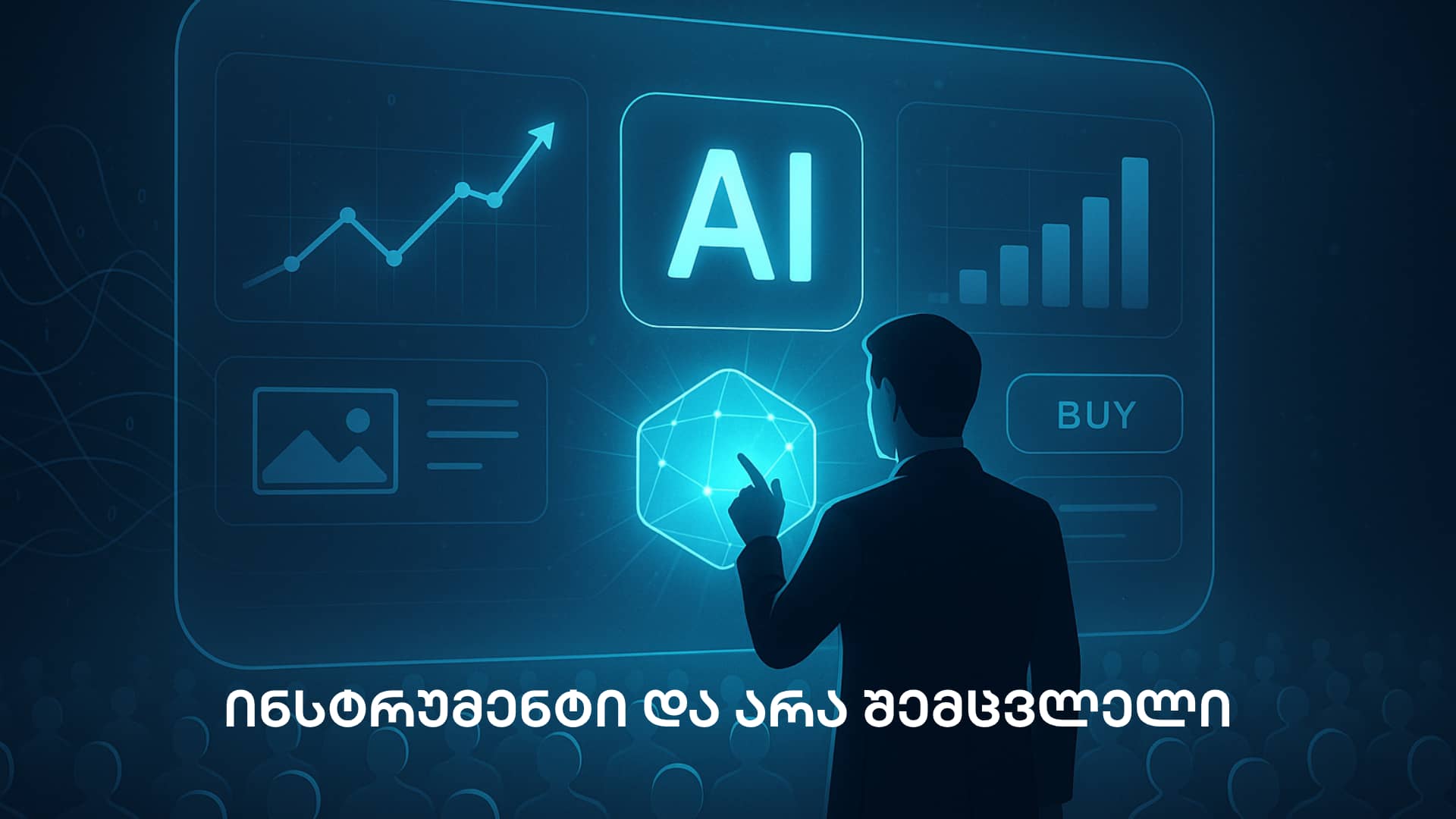
Artificial Intelligence isn’t replacing marketers—it’s empowering them to achieve more with less effort, make smarter decisions, and deliver better customer experiences at scale.
The businesses that learn to combine human creativity with AI-powered efficiency will define the future of digital marketing.